Huntsville Realtor Since 2000 • Broker Associate • Author • Born & Raised

Navigating the Secrets of Alabama Real Estate

A Buyer’s Guide in a Buyer Beware State

Alabama is a “buyer beware” state. That means the responsibility to uncover property defects falls squarely on you. This book is the guide I wish every buyer had before they signed anything.

Scroll to begin
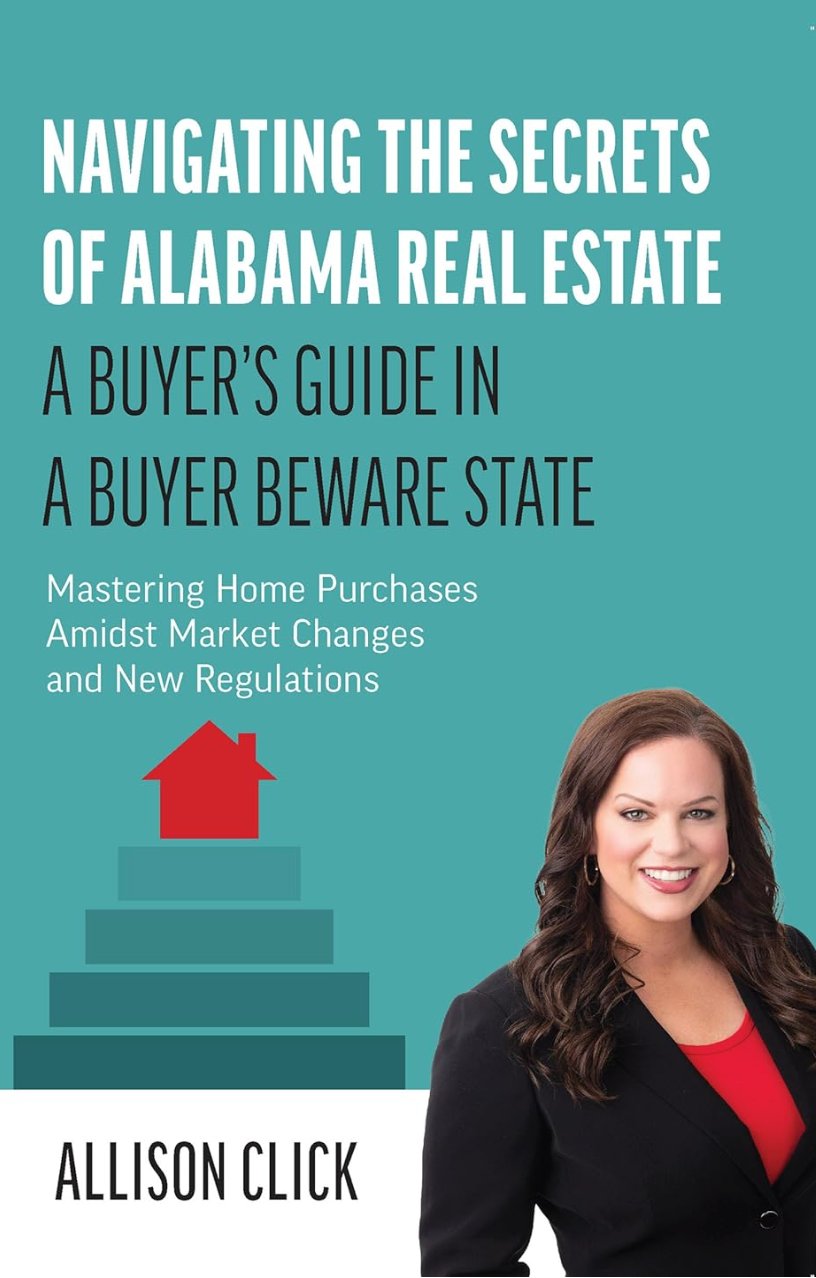
Navigating the Secrets of Alabama Real Estate by Allison Click - book cover
“Allison’s deep commitment to helping others navigate the complexities of the Alabama real estate market is evident on every page of this book.”
Joe Stumpf, Business Coach • Foreword
The Problem

Alabama Is a Buyer Beware State

In Alabama, sellers are not legally obligated to disclose all known issues with a property. That means structural problems, mold infestations, faulty wiring, and environmental hazards can all be hiding behind fresh paint and new carpet — and you may never know until it’s too late.

On top of that, the recent NAR settlement has shifted the financial landscape. Buyers may now be responsible for their agent’s commission — adding an unexpected burden that catches many people off guard. Understanding these changes isn’t optional anymore. It’s essential.

Two Stories, Two Outcomes

The Difference a Buyer’s Agent Makes

The Informed Buyer
Sarah’s Story
Sarah enlisted a seasoned buyer’s agent who recommended a thorough home inspection. It revealed significant mold in the crawl space — an issue Sarah would never have found on her own. Her agent negotiated with the seller to cover the full cost of remediation. Sarah saved thousands and moved into a safe home.
The Uninformed Buyer
John’s Story
John decided to skip hiring an agent to save on commission. Without professional guidance, he skipped the home inspection. After moving in, he discovered severe structural issues and mold in the basement. The cost of repairs was devastating — and because he hadn’t documented anything before closing, he had no recourse.
What You’ll Gain

Knowledge Is Your Best Defense

🔍
Comprehensive Understanding
Learn the intricacies of Alabama’s buyer beware laws and the new financial responsibilities brought by the NAR settlement.
📝
Expert Strategies
Detailed room-by-room inspection checklists. Tips for negotiating with sellers. What to fix, what to skip, and what pays off.
💪
Legal & Financial Preparedness
Pre-approval guidance, budgeting for hidden costs, understanding purchase agreements, and protecting yourself at closing.
Inside the Book

Six Chapters. One Complete Guide.

Chapter 1
Introduction to Buyer Beware
The NAR settlement explained. Why a buyer’s agent matters more than ever. Two contrasting case studies that show the stakes.
Read Chapter 1
+

In the evolving landscape of real estate, the phrase “buyer beware” has never been more pertinent. Understanding these changes is crucial for anyone entering the real estate market today.

The Impact of the NAR Settlement

The NAR settlement has reshaped how commissions are handled in real estate transactions. Traditionally, the seller paid the commission for both their agent and the buyer’s agent. This arrangement is no longer a given — buyers now need to be prepared to pay their agent’s commission. This shift places a new financial burden on buyers, many of whom might be tempted to forego hiring an agent altogether. However, navigating the real estate market without professional guidance can be risky.

It’s imperative to recognize that while you might save on commission fees by not using an agent, the potential costs of making uninformed decisions can far outweigh these savings.

The Role of a Buyer’s Agent

A buyer’s agent plays a critical role in safeguarding your interests. They are your advocate, negotiator, and advisor, guiding you through every step of the buying process. From identifying potential issues in a property to negotiating the best price, their expertise can save you from costly mistakes.

One of the most significant advantages of having a buyer’s agent is their access to market data and property histories — insights not readily available to the general public. Their experience in handling contracts and understanding legal obligations ensures that you are fully protected throughout the transaction.

Case Study 1 — The Informed Buyer
Sarah’s Story

Sarah understood the importance of having a buyer’s agent and enlisted the help of a seasoned professional. Her agent recommended a thorough home inspection, which revealed significant mold issues in the crawl space. The agent negotiated with the seller to cover the cost of remediation, saving Sarah thousands of dollars and ensuring her new home was safe.

Case Study 2 — The Uninformed Buyer
John’s Story

John decided to forego hiring an agent to save on commission fees. Without professional guidance, he did not conduct a home inspection. After moving in, he discovered severe structural issues and mold in the basement. The cost of repairs was substantial, and because he had not documented these issues before closing, he had no recourse against the seller.

Understanding the Home Inspection

A comprehensive home inspection is one of the most critical steps in the home buying process. A qualified inspector will examine everything from the foundation to the roof — including plumbing, electrical systems, and potential environmental hazards like mold or radon. In Alabama, a buyer beware state, the onus is on the buyer to identify and address any issues before closing.

The Importance of Disclosure

While sellers are required to disclose known defects in many states, this is not always the case in buyer beware states like Alabama. Even in states with disclosure requirements, there are often gray areas. A buyer’s agent can provide invaluable assistance, asking the right questions and ensuring that you are aware of all potential concerns before you sign.

Chapter 2
Understanding the Home Inspection
What inspectors look for. Structural integrity, mold, termites, radon, lead paint. How to select a qualified inspector and use the report to negotiate.
Read Chapter 2
+

A home inspection is a crucial part of the home buying process, offering a detailed understanding of the property you intend to purchase. It can reveal hidden problems that might not be immediately obvious — ensuring that you make an informed decision and giving you real leverage with the seller.

The Purpose of a Home Inspection

The primary purpose of a home inspection is to identify any existing or potential issues with the property. A thorough inspection provides a detailed analysis of the home’s condition, including its structure, systems, and components — helping you avoid costly surprises after purchase.

🏠Structural Components — Foundations, beams, and columns
Roofing — Shingles, gutters, and signs of leaks
Electrical Systems — Wiring, outlets, and service panels
💦Plumbing — Pipes, fixtures, and water heaters
🌮HVAC Systems — Heating, ventilation, and air conditioning
📄Interior & Exterior — Walls, ceilings, windows, doors, and safety
🌿Insulation & Ventilation — Energy efficiency and airflow
Environmental Hazards — Mold, radon, and other health risks

Selecting a Qualified Inspector

Look for inspectors certified by ASHI or InterNACHI. When interviewing candidates, ask about:

  • Experience — How long have they been in business and how many inspections completed?
  • Credentials — Are they certified and licensed in your state?
  • References — Can they provide testimonials from past clients?
  • Sample Reports — Review a sample to ensure it’s thorough and easy to understand.
  • Insurance — Do they carry Errors & Omissions (E&O) professional liability insurance?

The Inspection Process

1
Exterior — Foundation, siding, windows, doors, and signs of water intrusion
2
Roof — Shingles, flashing, gutters, and any signs of leaks or damage
3
Interior — Walls, ceilings, floors, and stairs for cracks, stains, or structural issues
4
Electrical — Outlets, switches, main panel; proper grounding and hazardous wiring
5
Plumbing — Water pressure, leaks, pipe condition, and water heater age
6
HVAC — Heating and cooling function, insulation, and ventilation
7
Attic & Basement — Structural issues, moisture problems, and proper insulation
8
Environmental Hazards — Testing for mold, radon, asbestos, and other health risks

Using the Inspection Report

Option A — Request Repairs

Ask the seller to make necessary repairs before closing. Your agent can help prioritize what’s essential versus cosmetic.

Option B — Negotiate Price or Credit

Seek a lower purchase price or a closing credit to cover repair costs — often a faster path to resolution.

Option C — Walk Away

If issues are too severe, you may back out of the deal — provided your contract includes an inspection contingency.

Common Issues Found During Inspections

  • Roofing Problems — Leaks, missing shingles, and damaged flashing can cause significant water damage
  • Electrical Issues — Outdated wiring and overloaded circuits are frequent fire hazards
  • Plumbing Leaks — Leaking pipes and water heaters lead to water damage and mold growth
  • Foundation Cracks — Significant cracks can affect the structural integrity of the entire home
  • HVAC Failures — Malfunctioning systems mean high energy bills and discomfort
  • Mold & Mildew — High moisture in basements and crawl spaces creates serious health hazards
Remember: A home inspection is an investment in your future. Your buyer’s agent is an invaluable resource — helping you interpret findings, prioritize repairs, and negotiate the best possible outcome.
Chapter 3
Room-by-Room Guide for Buyers
What to look for in every room — bedrooms, bathrooms, kitchens, living spaces, outdoor areas, basements, and attics. What upgrades pay off.
Read Chapter 3
+

Each room in a house serves a unique purpose and comes with its own set of potential issues and improvements. This guide highlights what to look for during your inspection and which upgrades will yield the best returns on your investment.

🛌 Bedrooms
  • Popcorn Ceilings — Common in older homes; removal modernizes the space
  • Flooring — Hardwood is highly sought after; assess carpet age and condition
  • Closet Space — Size and functionality matter; organizers add value at low cost
  • Lighting — Ensure sufficient, updated fixtures; ceiling fans are a popular upgrade
  • Window Treatments — Neutral blinds or shutters provide privacy and broad appeal
🚽 Bathrooms
  • Fixtures & Fittings — Modern faucets and showerheads update the space at low cost
  • Vanity & Storage — Ample counter space improves both function and appearance
  • Tiles & Grout — Check for cracks, missing tiles, or moldy grout
  • Lighting & Mirrors — LED lighting and a large mirror enhance the sense of space
  • Bathtub & Shower — Inspect for mold or mildew; reglazing can refresh the space
🏠 Living & Family Rooms
  • Fireplace — Ensure it’s in good working order; gas conversion adds efficiency
  • Flooring — Hardwood is highly desirable; assess carpet condition honestly
  • Lighting — Balance natural light with adequate artificial lighting
  • Walls & Paint — Neutral, fresh paint makes a room feel updated and welcoming
  • Built-Ins & Storage — Built-in shelving adds both functionality and charm
🍳 Kitchens
  • Cabinets — Painting or refacing is cost-effective; ensure hardware is modern
  • Countertops — Granite or quartz over laminate delivers strong ROI
  • Appliances — Modern, energy-efficient appliances that match in style are a major plus
  • Backsplash — A stylish, neutral backsplash adds character
  • Flooring & Lighting — Tile or hardwood preferred; adequate task lighting essential
🌟 Dining Areas & Home Offices
  • Dining Lighting — A statement chandelier or pendant lights set the tone
  • Dining Flooring — Hardwood or tile over carpet for easy cleaning and lasting appeal
  • Office Connectivity — Ample outlets and strong internet access are essential
  • Office Lighting — Prioritize natural light plus dedicated task lighting
  • Office Storage — Built-in shelving or cabinets add value and a professional feel
🌳 Outdoor Areas
  • Landscaping — Fresh mulch, trimmed hedges, and colorful plants boost curb appeal
  • Decks & Patios — Check for rotten boards and loose railings; a fresh stain transforms the space
  • Outdoor Lighting — Pathway and deck lights enhance both safety and ambiance
  • Privacy Fences — Ensure existing fences are in good condition
🏠 Basements & Attics
  • Moisture & Mold — Any signs must be addressed immediately — red flags in Alabama
  • Insulation — Critical for energy efficiency; check attic insulation depth and condition
  • Structural Issues — Cracks here affect the entire home’s integrity
  • Storage Solutions — Shelving and organization make these spaces more functional
Maximizing Your Investment: Focus improvements on kitchens, bathrooms, and curb appeal — they consistently top the ROI list. Address major issues before they become costly problems.
Chapter 4
Major Systems & Structures
Roof, foundation, electrical, plumbing, HVAC, windows, insulation, and water management. The expensive things most buyers overlook.
Read Chapter 4
+

The major systems and structures of a home are often the most expensive to repair or replace. A thorough inspection of each is essential — these are the areas where uninformed buyers get hurt the most.

Roof
Inspect For
  • Age and material — asphalt shingles last 20–30 yrs; metal 40–70 yrs
  • Missing, curling, or damaged shingles and granule loss
  • Water stains or mold in attic; gutters directing water away from foundation
Maintain By
  • Annual professional inspection and post-storm checks
  • Keeping gutters and downspouts clear of debris
  • Addressing minor issues promptly before they escalate
🏛Foundation
Inspect For
  • Hairline cracks are normal; large cracks signal settling or structural issues
  • Efflorescence or dampness in basement or crawl space
  • Doors and windows that stick — a sign of foundation movement
Maintain By
  • Ensuring ground slopes away from the home for proper drainage
  • Sealing minor cracks to prevent water intrusion
  • Calling a structural engineer for significant cracks or settling
Electrical System
Inspect For
  • Outdated wiring (knob-and-tube or aluminum) and corroded panels
  • Sufficient outlets; test switches and outlets for proper function
  • GFCIs in kitchens, bathrooms, and outdoor outlets
Maintain By
  • Periodic inspection by a licensed electrician, especially in older homes
  • Upgrading wiring, panels, and outlets to current safety standards
  • Avoiding overloaded circuits; using surge protectors
💦Plumbing System
Inspect For
  • Leaks, corrosion, or outdated materials like lead or galvanized pipes
  • Water heater age and condition — most last 10–15 years
  • Faucets, showers, and toilets; slow drains or backups
Maintain By
  • Annual inspection for leaks, corrosion, and proper function
  • Flushing water heater annually to remove sediment
  • Insulating pipes in unheated areas to prevent freezing
🌮HVAC System
Inspect For
  • Age and efficiency — systems older than 15–20 years may need replacement
  • Proper airflow and ductwork for leaks, damage, or poor insulation
  • Thermostat function; consider upgrading to a smart thermostat
Maintain By
  • Professional servicing twice a year — before heating and cooling seasons
  • Replacing air filters every 1–3 months
  • Cleaning ducts every few years to remove dust and allergens
🪟Windows & Doors
Inspect For
  • Drafts, broken seals, or gaps; ensure smooth operation
  • Cracked glass, damaged frames, or condensation between double-pane glass
  • Locks and hardware for security and proper function
Maintain By
  • Re-sealing and caulking to prevent drafts and water intrusion
  • Regular cleaning to maintain appearance and function
  • Replacing outdated windows and doors to improve energy efficiency
🏠Insulation, Ventilation & Water Management
Inspect For
  • Adequate insulation in attic, walls, and floors — check for gaps or settling
  • Proper ventilation in attics, crawl spaces, and bathrooms
  • Gutters, downspouts, and grading directing water away from the foundation
Maintain By
  • Upgrading insulation in attics and crawl spaces for best ROI
  • Cleaning and maintaining vents and exhaust fans regularly
  • Sealing air leaks around windows, doors, and other openings
The Bottom Line: These systems represent the largest potential costs in any home purchase. An informed buyer who understands what to look for — and has a qualified buyer’s agent and inspector on their side — can identify problems before closing, negotiate repairs, and avoid financial disaster down the road.
Chapter 5
Navigating the Real Estate Market
Buyer’s market vs. seller’s market. Researching local trends. Timing your purchase. Working with an agent who knows the terrain.
Read Chapter 5
+

Market conditions can significantly impact property values, your negotiation power, and the overall buying experience. Understanding what’s happening in the market — and having the right guidance — can mean the difference between a smart purchase and a costly mistake.

Buyer’s Market vs. Seller’s Market

Buyer’s Market

More homes than buyers. Sellers are more willing to negotiate on price and terms. Watch for: longer days on market, price reductions, and rising inventory. This is your moment to negotiate repairs, concessions, and a lower price.

Seller’s Market

More buyers than homes. Expect competitive bidding, higher prices, and fast-moving sales. Have financing pre-approved and be ready to act decisively with a strong initial offer.

Researching Local Market Trends

📍Listings — Track available homes, price changes, and time on market in your target area
📊Market Reports — Monthly and quarterly reports reveal average prices, inventory levels, and trends
🏠Comparable Sales — Recently sold similar homes give you a realistic picture of true market value
📈Economic Indicators — Interest rates, employment, and local development all influence market behavior

Strategic Decisions for Buyers

  • Set a firm budget — Factor in potential rate changes and market fluctuations; know your ceiling
  • Get pre-approved — In a seller’s market, financing readiness separates serious buyers from the rest
  • Negotiate wisely — In a buyer’s market, push for repairs and concessions; in a seller’s market, lead with your strongest offer
  • Don’t skip the inspection — No matter how competitive the market, waiving inspection contingencies in Alabama is a serious risk

Timing the Market

☀ Spring & Summer

Peak activity — more listings, more buyers, faster sales, and higher prices. More competition, but also more choices.

🍂 Fall & Winter

Slower market — fewer listings and buyers, but motivated sellers. Often an opportunity to find deals before year’s end.

How a Real Estate Agent Navigates This for You

🔍Market Expertise
Agents have access to comprehensive data not available to the public — helping you set realistic expectations and make informed offers.
🤝Negotiation Skills
Experienced agents advocate on your behalf in every negotiation — whether pushing for price reductions, repair credits, or favorable contract terms.
👥Network & Resources
A trusted agent brings a network of lenders, inspectors, and contractors — streamlining the process and connecting you with professionals you can rely on.
📄Handling Paperwork
Real estate transactions involve significant legal documentation. Your agent manages these details so nothing slips through the cracks.
The Bottom Line: The right agent doesn’t just show you homes — they read the market, protect your interests, and guide you to the best possible outcome in any conditions.
Chapter 6
Legal & Financial Preparedness
Purchase agreements, title searches, disclosure requirements, closing process. Mortgage pre-approval, budgeting, and working with professionals.
Read Chapter 6
+

Buying a home isn’t just a physical decision — it’s a legal and financial commitment. Being fully prepared on both fronts minimizes risk, protects your investment, and ensures nothing surprises you at the closing table.

Key Legal Elements

📝Purchase Agreement
A legally binding contract outlining the purchase price, closing date, contingencies, and what’s included in the sale. Always have a real estate attorney review it to ensure every term is clearly in your best interest.
🔍Title Search & Insurance
A title search verifies the seller’s legal right to sell and checks for liens or encumbrances. Title insurance is a one-time fee that protects you against future ownership disputes — it’s essential, not optional.
Disclosure Requirements
Sellers are typically required to disclose known defects. In Alabama’s buyer beware environment, review every disclosure carefully and ask your agent to help identify gaps.
🥇Closing Process
Conduct a final walkthrough to confirm the property is in agreed-upon condition. Review the closing statement (HUD-1) carefully for all fees and charges before signing.

Financial Preparedness

01
Mortgage Pre-Approval

Signals to sellers you’re serious and gives you a clear budget. You’ll provide income statements, tax returns, and credit reports to your lender.

02
Down Payment

Typically 3% to 20% of the purchase price, depending on your mortgage type and lender requirements. Know this number before you start shopping.

03
Closing Costs

Usually 2% to 5% of the loan amount — covering appraisal, title insurance, attorney fees, and more. Budget for this separately from your down payment.

04
Ongoing Costs

Mortgage payments, maintenance, utilities, HOA fees, and unexpected repairs. Budget conservatively — homeownership always has surprises.

Critical Contingencies to Protect You

🔍Inspection Contingency — Right to back out if significant issues are found during inspection
📈Appraisal Contingency — Ensures the property appraises for at least the purchase price
🏠Financing Contingency — Protects you if you are unable to secure your mortgage
📝Attorney Review — Time to have a real estate attorney review all contract terms

Your Professional Team

⚖ Real Estate Attorney

Reviews contracts, handles legal details, and protects your interests — especially important for complex or high-value transactions.

🏠 Mortgage Broker

Compares offers from multiple lenders to find the best rate and terms. Can save you thousands over the life of your loan.

🔍 Home Inspector

Provides the detailed report you need to negotiate repairs, price reductions, or credits — your most important due diligence tool.

Final Word: Legal and financial preparedness isn’t optional — it’s the foundation of a smart purchase. Understand the documents you’re signing, budget for every cost, and surround yourself with professionals who know Alabama real estate. Knowledge is your best defense.
Navigating the Secrets of Alabama Real Estate by Allison Click
The Book

Your Essential Alabama Buyer’s Guide

This indispensable guide is your key to making informed, confident decisions in one of the most complex real estate markets in the country. Written with a foreword by business coach Joe Stumpf, it combines professional expertise with real-world stories to equip you for every step of the buying process.
Real-life case studies
Room-by-room inspection guide
NAR settlement explained
Negotiation strategies
Legal & financial checklists
Expert professional guidance
🛒 Order on Amazon
Allison Click — Huntsville Alabama Real Estate Broker
About Allison

Born and Raised in Huntsville

Allison Click is a Broker Associate with Leading Edge Real Estate Group in Huntsville, Alabama. Licensed since 2000, she has spent over two decades helping buyers, sellers, and investors navigate the Alabama and Tennessee Valley real estate markets.

Born and raised in Huntsville, Allison knows the Rocket City inside and out — from established neighborhoods to the newest communities near Redstone Arsenal and Research Park. She specializes in residential resales, new construction, land, and investment properties.

Allison stays on top of education, training, and technology to provide world-class service. She holds designations including GRI, ABR, CRS, and MRP, plus her Broker Associate license and auctioneer certification. She’s also an active participant in Leadership Huntsville programs including Connect, Flagship, and Management Academy.

Her tagline says it all: Your next home is just a CLICK away.

Since 2000
Licensed Realtor
Huntsville
Born & Raised
Broker
Associate License
Author
Published 2024
“Knowledge is your best defense in the real estate market. Stay informed, stay vigilant, and always be prepared to make the best decisions for your future home.”
Allison Click
Ready to Make Your Move?

Don’t Navigate Alabama Real Estate Alone

Whether you’re a first-time homebuyer or an experienced investor, Allison brings over two decades of Huntsville expertise, a published guide in your hands, and the kind of care that turns clients into lifelong referrals.

Call (256) 682-0770
Allison Click • (256) 682-0770Allison@ClickALRealEstate.com
ClickALRealEstate.com • Leading Edge Real Estate Group • 924 Merchants Walk, Huntsville, AL 35801
AL Real Estate License #66174 • Author of Navigating the Secrets of Alabama Real Estate
🛒 Order on Amazon
#YourNextHomeIsJustACLICKAway
Allison Click
Huntsville Realtor Since 2000
Call Allison